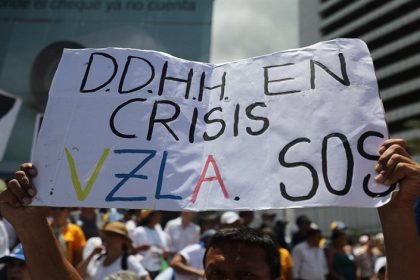

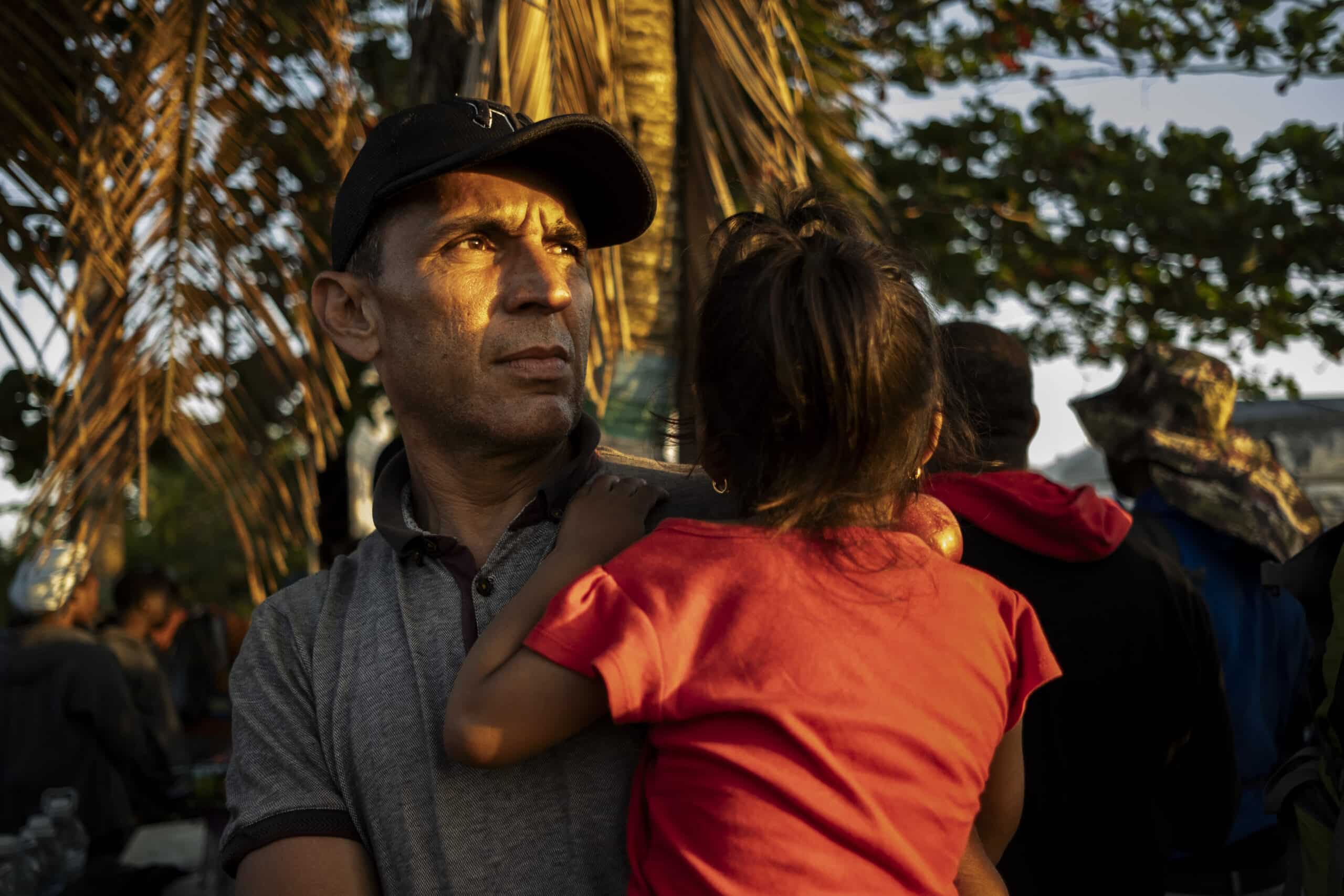
Venezuelan migrants in Colombia are trapped in a legal limbo without guarantees of protection: the closure of regularization mechanisms, lack of recognition of the right to asylum, reduction in international cooperation, and the failure to protect politically persecuted individuals further deepen their vulnerability. (Photos under copyright)
Colombia remains the main host country for Venezuelan migrants. Since 2015, over 2.8 million people have crossed the border searching for protection, employment, and dignified living conditions. However, the progress made in the early years regarding regularization and integration has been gradually dismantled. According to the latest count by the UN Regional Inter-Agency Coordination Platform (R4V), more than 450,000 people remain in legal limbo, with no real options for regularization or access to basic rights such as health care, education, or work.
A new report published by PROVEA and the Human Rights Center of the Andrés Bello Catholic University (UCAB) documents how recent decisions by the Colombian government, combined with increasingly restrictive U.S. migration policies and declining international cooperation, have weakened the state’s response and left those fleeing the Venezuelan crisis without protection, even in cases requiring urgent international protection.
No papers, no refuge: between institutional dismantling and lack of protection
Under the administration of President Gustavo Petro, key institutions such as the Border Management Office (previously part of the presidency) and the Single Registry of Venezuelan Migrants (RUMV) have been eliminated. The RUMV was a necessary first step to access the Temporary Protection Permit (PPT) granted under the Temporary Protection Statute. Since then, no general regularization mechanisms have been created for people who entered the country after June 2023.
Although other options exist, such as the PEP Tutor and the Special Visitor Visa, their reach is limited, the requirements are difficult to meet, and they have not been accompanied by public information campaigns. The lack of policy continuity has led to misinformation, delays, and growing obstacles for migrants trying to access basic services or regularize their status.
Despite a significant increase in Venezuelans fleeing political persecution, particularly after the July 2024 presidential election in Venezuela, Colombia has failed to recognize them as persons in need of international protection. Those arriving without passports, via irregular crossings, and under emergency conditions are treated as economic migrants, without access to asylum procedures or institutional support.
The report warns of a serious omission in Colombian migration policy: the absence of differentiated mechanisms to identify and protect individuals fleeing political persecution, including activists, journalists, and human rights defenders targeted by Nicolás Maduro’s security forces. This failure prevents the effective provision of international protection and reproduces risks in the host country.
Reversing the route: return migration and collapse of cooperation
Colombia has also begun to receive a growing flow of people deported from the United States, a phenomenon the report refers to as return or reverse migration. Many of these individuals had previously attempted to integrate into Colombian society but left searching for better opportunities. Now they are being returned without documents, without resources, and in precarious conditions.
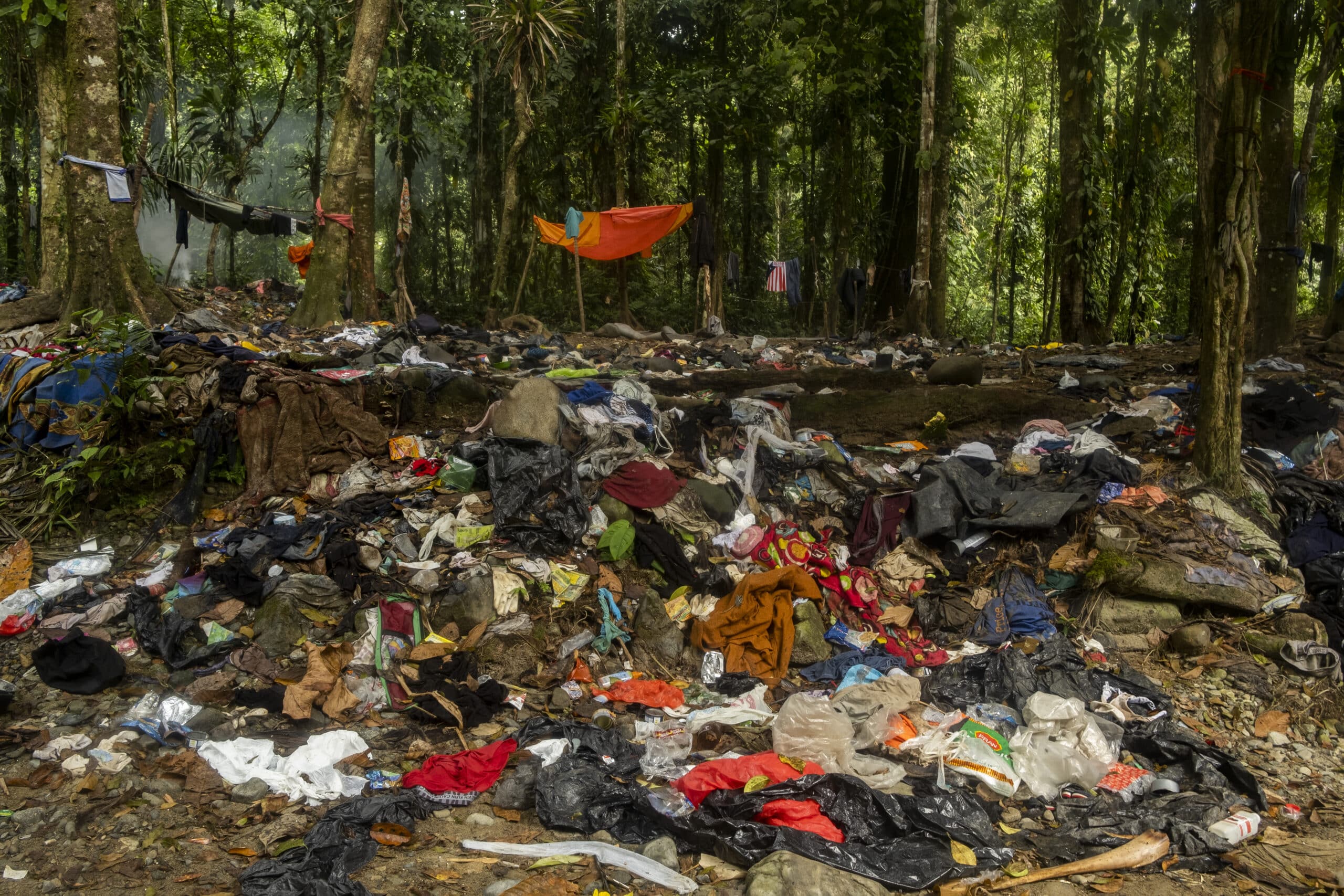
The situation has worsened due to the recent suspension of U.S. cooperation, particularly following the shutdown of USAID in 2025. This decision affected essential programs for migrants and refugees: food distribution, basic medical care, psychosocial support, and shelter operations. It is estimated that over 1,000 jobs were lost in Colombia alone, and three out of five organizations that were implementing humanitarian projects now have no means to continue.
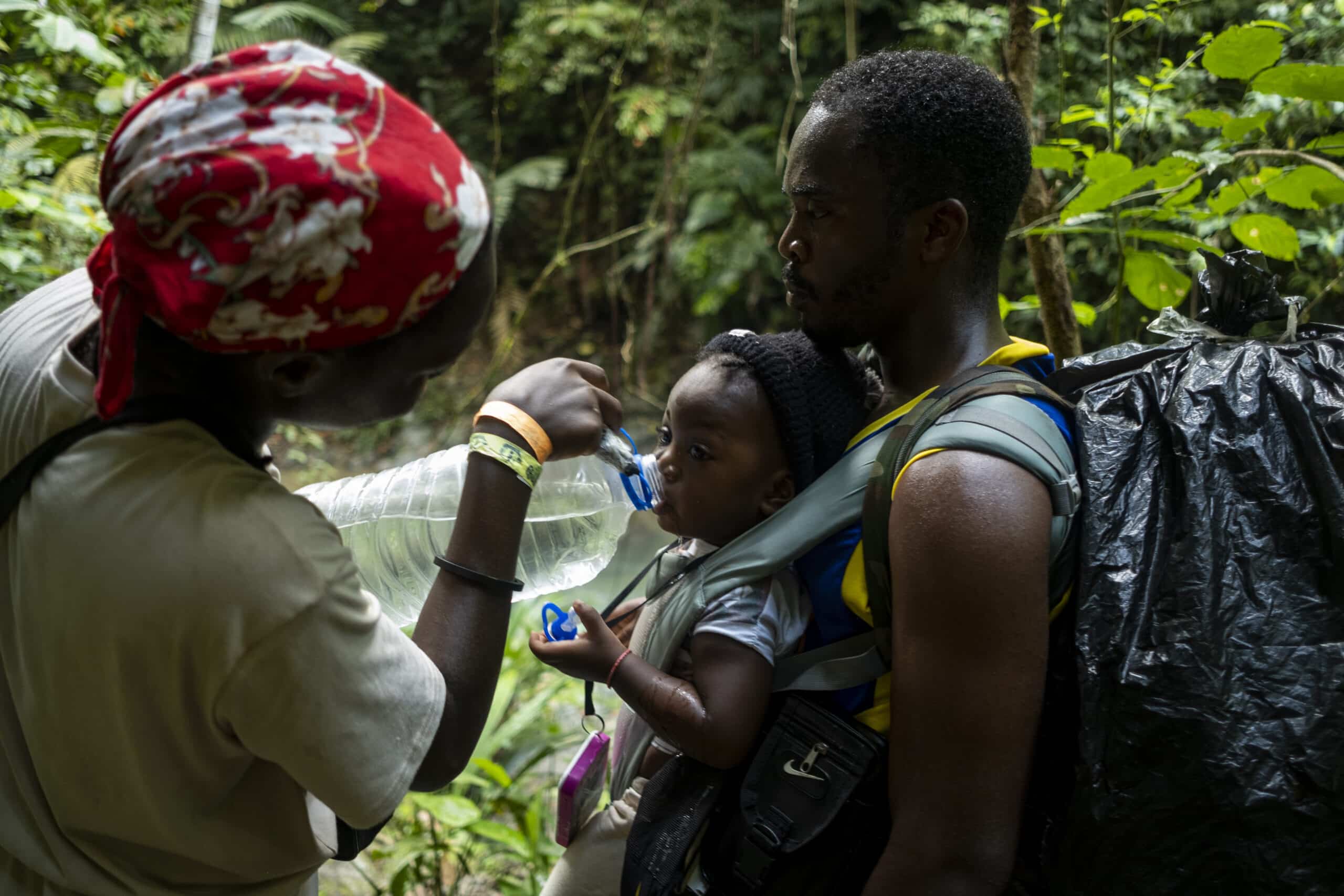
The withdrawal of international support exposes the fragility of a response that has depended excessively on external cooperation and lacks a national migration policy that is comprehensive, sustainable, and grounded in human rights.
Justice steps in where the State fails
In the absence of effective policies, Colombia’s Constitutional Court has had to act as a guarantor of rights. Through a series of recent rulings, the Court has overturned restrictions imposed by the Petro administration and has upheld rights to health, nationality, family unity, and late registration in the RUMV.
In ruling SU-543 of 2023, for example, the Court ordered the government to design a public policy aimed at reducing excessive delays in the asylum application process—which can take up to four years. The Court also demanded that applicants be allowed to work and access basic services while awaiting a response and warned that unjustified restrictions on these rights disincentivize asylum applications and may lead to indirect returns prohibited under international law.
However, as of the publication of this report, no significant progress has been made in implementing these court mandates.
We urge the Colombian State to:
- Reactivate the validity of the PPT for those who have remained outside Colombia beyond the permitted period and who are now in reverse migration processes.
- Design a permanent regularization plan that evolves from the current Temporary Protection Statute into pathways to long-term residency for Venezuelan migrants and refugees with community ties in Colombia.
- Eliminate administrative barriers through public information campaigns and targeted assistance in areas with high migrant populations.
- Conduct a comprehensive review of the current Integral Migration Policy, prioritizing human rights, social inclusion, and access to basic services.
- Expedite refugee status determination processes and publish clear timelines and prioritization criteria, in accordance with Constitutional Court ruling SU-543 of 2023.
- Diversify international funding sources by building alliances with other countries, multilateral bodies, and the private sector.
- Support civil society and humanitarian organizations with technical, financial, and strategic assistance to ensure the continuity of medical, social, and integration services.
Informe completo aquí: