
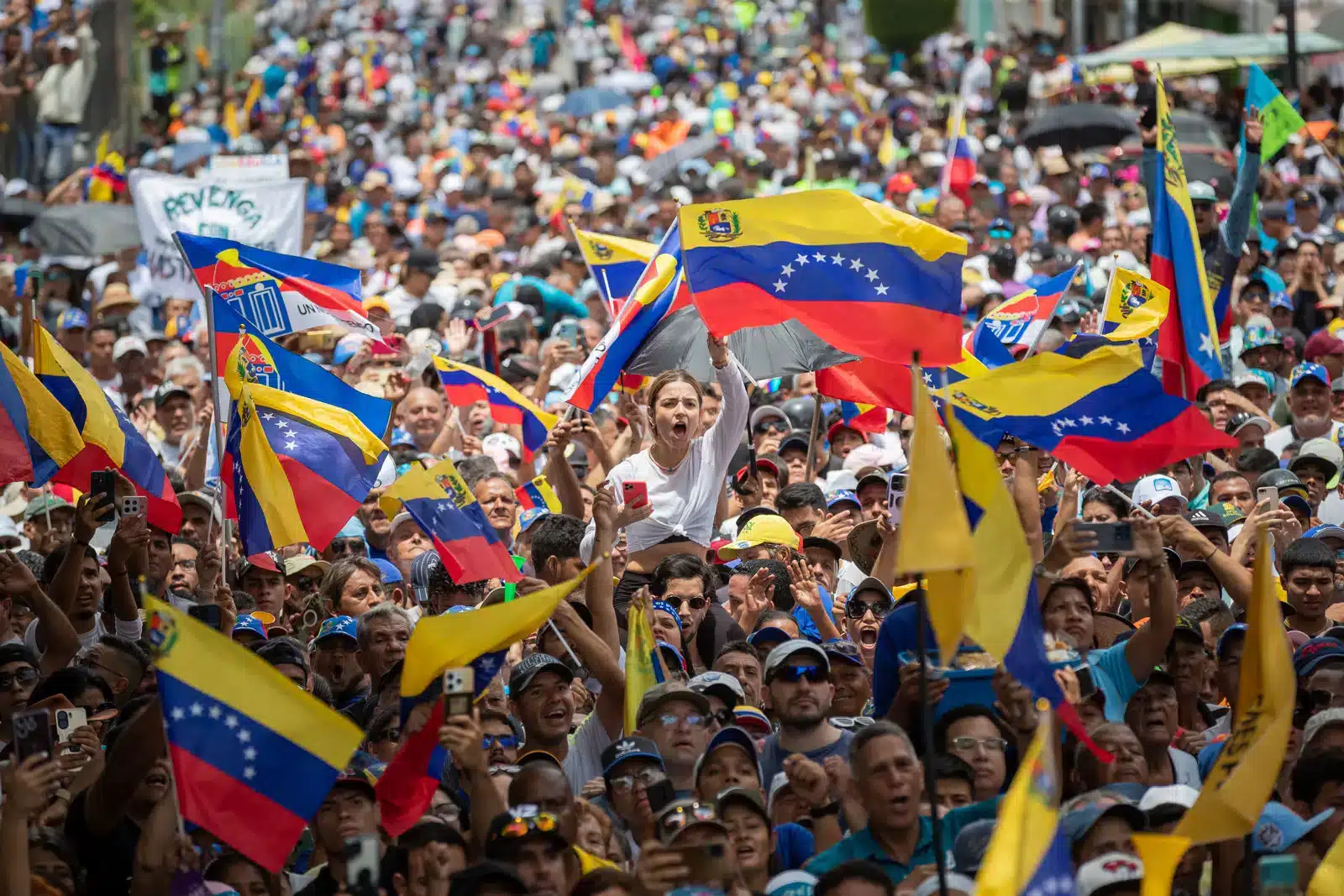
- In a context of profound instability, in which the Venezuelan government is attempting to overcome the crisis of legitimacy by force, an intense US military mobilization has been generated in the Caribbean, with operations that constitute an illegal exercise of lethal force and the summary execution of individuals.
- The government of Nicolás Maduro, which continues to obstruct the majority’s desire for peaceful political change, is reinforcing the total militarization of the country under the justification of “defense of sovereignty”, through the progressive closure of civic space, the persecution of dissidents, and the disregard for its social rights obligations.
- The international community must immediately support the Venezuelan people in their need to re-democratize the country in accordance with international law and guarantee human rights at all times and without excuse.
Caracas. – A country permanently besieged by repression and accelerated and widespread inequality among the population, the denial of justice, and the dismantling of democratic institutions is unviable.
The 2024 presidential elections, which were an opportunity to overcome the Venezuelan crisis peacefully and democratically, were overshadowed by the hijacking of the popular will amid an unprecedented escalation of repression in recent history.
The extinction of democracy and the de facto suspension of the rule of law unleashed a seemingly endless spiral of abuses and impunity.
As the United Nations Fact-Finding Mission for Venezuela stated this week: “The State’s repressive machinery continues to suffocate Venezuelan civil society, whether it is an opposition member or not.”
Along with the undermining of public freedoms, an economic model based on the disregard for state obligations regarding Economic, Social, Cultural, and Environmental Rights (ESCER) has been imposed. This has exponentially increased inequality by strangling family income and savings and making decent employment precarious.
The economic collapse has led to the proliferation of criminal governance and economies, putting vulnerable populations such as Indigenous communities, peoples, and border dwellers at serious risk, in addition to causing severe environmental damage.
Fishing boats have been reconfigured to smuggle migrants and traffic humans, wildlife, and fuel.
The “other businesses” – as they are called on the coasts or in the depths of the Venezuelan Amazon rainforest – have flourished alongside the economic crisis that began in Venezuela a decade ago.
They were then consolidated under the protection of a governance that cedes territory and facilitates these activities outside the formalities established by the Constitution.
An unprecedented escalation
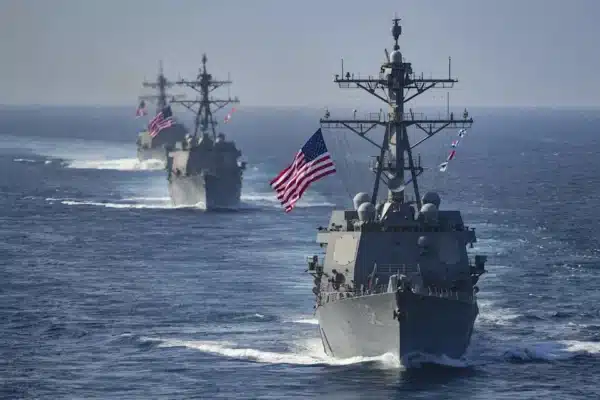
In this context of profound instability, in which those in power are attempting to overcome the crisis of legitimacy by force, persecuting and threatening the civilian population, a major and unprecedented US military mobilization has emerged in the Caribbean, near Venezuelan territorial waters.
The heightened rhetoric even reached the UN General Assembly, meeting this week in New York, with a controversial and threatening intervention by the US president.
Within the framework of the deployment of US military assets in the Caribbean, details remain scarce regarding the deadly attack that occurred on September 2 against a vessel that, according to the US government, departed from Venezuela transporting drugs and 11 alleged members of the “Tren de Aragua” gang.
Questions about the operation have been fueled, among other things, by the scant information provided by the White House administration.
This and other lethal attacks, which took place after a buildup of US maritime forces in the Caribbean, mark a paradigm shift in how the United States is prepared to combat drug trafficking in the Western Hemisphere.
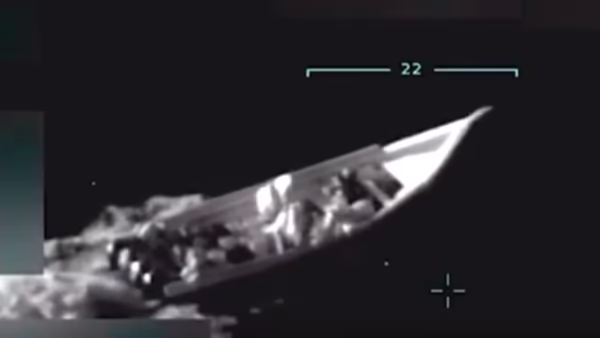
In light of international law—which, as a human rights organization with 37 years of history, we claim as a historic achievement for humanity—these events constitute clear violations and undermine a field of law that could justify the indiscriminate use of lethal force against civilians.
“The mere extreme action of sinking the vessel and its occupants deprives society of knowing the truth” NGO Alerta Venezuela warned at the time.
For its part, Amnesty International stated that “the use of lethal force in this context has absolutely no justification” and recalled that “the intentional use of lethal force is governed by the law enforcement standards established in international human rights law.”
The excessive use of force and the resulting attacks can be classified as extrajudicial executions.
Worrying detachment from protection systems and international standards
The fight against terrorism and drug trafficking relies on international standards to ensure respect for international law and human rights.
Thus, the United Nations has an Office on Drugs and Crime, which has designed a strategic vision for Latin America and the Caribbean for 2022-2025, including a human rights perspective to achieve the 2030 Sustainable Development Goals.
The UN also has an Office on Counter-Terrorism, while, since 2006, its General Assembly has approved a Global Strategy on Terrorism, which is updated every two years by that body. States are required to protect human rights and fundamental freedoms in the fight against terrorism.
The progressive disengagement of international systems for the protection of human rights is worrying, as it fosters the dangerous notion that international governance is optional or meaningless, further weakening the global consensus on the application of human rights at a time of great global uncertainty.
On the Venezuelan side, it is clearly paradoxical that Nicolás Maduro’s administration calls on the United Nations to safeguard the sovereignty of the Venezuelan state while pursuing a policy of undermining the scope of the UN’s own human rights mechanisms.
It is worth remembering that in 2024, the Maduro government expelled the members of the Office of the United Nations High Commissioner for Human Rights, only to later allow the entry of only one official, thus rendering its presence in the country negligible.
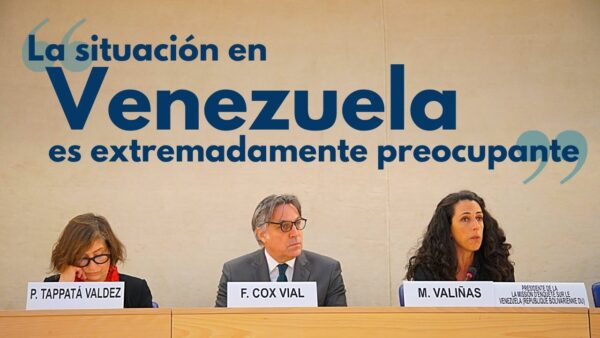
The FFM was established and mandated by the UN Human Rights Council in 2019 to assess the serious human rights violations in Venezuela.
It has also failed to allow the entry of the UN Fact-Finding Mission since its creation in October 2019, nor does it respond to its requests for information while insulting the commissioners during debates on their reports in the Human Rights Council.
Furthermore, it fails to comply with the recommendations of the Universal Periodic Review (UPR) and routinely fails to respond to communications on human rights violations sent by UN Rapporteurs and Working Groups.
Además, incumple con las recomendaciones del Examen Periódico Universal (EPU) y suele no responder a las comunicaciones sobre violaciones a derechos humanos enviadas por los Relatores y los Grupos de Trabajo de las Naciones Unidas.
Within the Inter-American System, the Maduro administration maintained its denunciation of the American Convention on Human Rights (ACHR)—filed in 2012 during the administration of Hugo Chávez and in force since September 2013 with Nicolás Maduro as president—to evade the jurisdiction of the Inter-American Court of Human Rights (IACourt) and the scrutiny of the Inter-American Commission on Human Rights (IACHR), a situation recently reversed by the IACourt.
Greater militarization to control society
The Venezuelan government is responding to this situation through authoritarianism and abuses, generating new human rights violations and justifying its actions under the umbrella of the “fight against right-wing terrorism.”
The response of Nicolás Maduro’s government gives new impetus to the total militarization of the country under the justification of “defense of sovereignty,” while insisting on ignoring the popular will expressed on June 28th and intensifying human rights abuses through the closure of civic space, the persecution of political dissent, and the disregard for its social rights obligations.
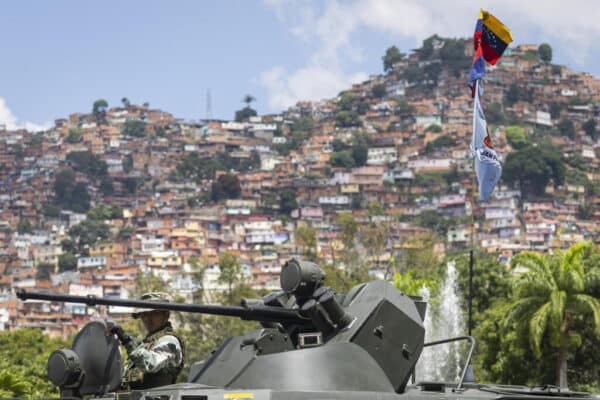
With the newly created Integral Defense Areas, armored vehicles and soldiers occupied low-income neighborhoods that had been repressed after the June 28 elections, in order to “train” them in the defense of national sovereignty. | EFE
The Venezuelan State has a constitutional obligation to adopt the measures it deems appropriate for the defense of national sovereignty. However, these measures must be proportional and consistent with practices that do not entail human rights violations or the neglect of its social obligations.
It is worrying that at this juncture, there will be a considerable increase in military-related spending, sacrificing resources that should be allocated to addressing high levels of poverty and the crisis in public services, thereby increasing the hardships faced by the population.
The National Executive’s announcement of the possible declaration of a State of External Unrest and the approval of Decree No. 5,164, which creates the so-called Integral Defense Areas (ADIs) of the Integral Defense Operational Zones (ZODIs) attached to the Strategic Integral Defense Regions (REDIs), constitute crucial steps toward the total militarization of the country and opens the door to further abuses.
The prolonged and increasingly growing militarization of the territory—which has been protected by the national security doctrine—has generated serious consequences for citizen protection.
The creation of Comprehensive Defense Areas in the country’s 335 municipalities poses a serious and additional threat to the exercise of the rights to freedom of association, peaceful assembly, and expression, among others.
This announcement comes in parallel with the call for military training in popular communities, which have been swarmed with tanks and hundreds of soldiers.
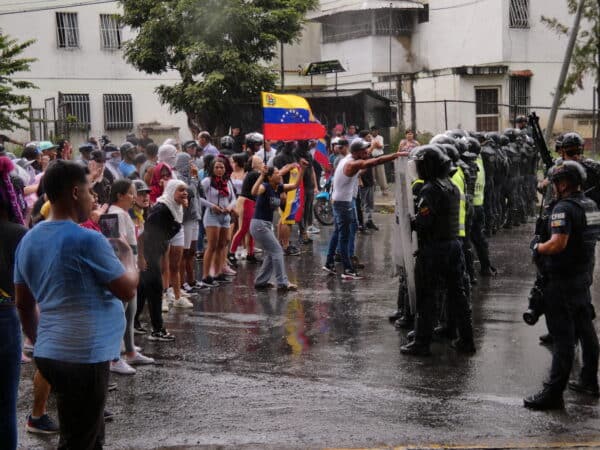
These same communities, after staging post-election protests, were victims of massive raids and acts of harassment through the installation of hundreds of police-military cordons, severely impacting family life and constituting acts of state terrorism.
Democracy, Human Rights, and Multilateralism
The few conversations between the Trump and Maduro administrations at the beginning of the year, which Nicolás Maduro recently dismissed as “wasted,” were limited to issues related to the mass and summary deportations of Venezuelans in the United States, the release of Americans illegally imprisoned in Venezuela, and new licenses for the Chevron oil company to continue operating in the country.
Two notable absences are evident in the conversations, narratives, and actions of both governments: the need to re-democratize the country and the unwavering obligation to respect international law and guarantee human rights at all times and without excuse.
The Venezuelan crisis has had a severe impact on the lives and rights of millions of Venezuelans and also on the stability of the region.
However, we insist that overcoming it must occur within the framework of respect for international law, through the efforts of multilateralism and citizen pressure from democratic sectors, with a focus on guaranteeing the human rights of the population.
Provea affirms that no circumstance, no matter how serious, can justify disregarding human rights and international law.
Leaving the field open for the violation of human rights is not, and should not be, an option.
We reiterate that these are times of firmness and historic commitment. We urge all actors in national life to continue to stand by a people determined to live with dignity and in truth; a people who peacefully decided their political destiny.